The Male Midlife MOT – Understanding What’s Under the Bonnet
In the second of her two-part series on male ageing, consultant plastic, reconstructive and aesthetic
surgeon Dr Rozina Ali moves beyond the changes we can see in the mirror to consider what may be
happening underneath. From changing body composition, muscle and fat distribution to metabolic
and hormone health, she explains why a midlife MOT should start with understanding the body you
have, and why looking better, feeling better and functioning well should be part of the same
conversation.
In the first part of this series, I looked at the visible signs of male ageing: the face, eyes, skin, scalp
and hair. But those are only part of the story. By our 40s, 50s and beyond, many men begin to notice
other changes too. The waistline may expand, muscle becomes harder to maintain, fat seems to
settle in places it didn’t before and clothes start fitting differently. Energy, sleep, fitness and general
wellbeing may change as well.
Often, the response is to stand on the bathroom scales, decide that a few kilos need to come off and
embark on a pill, a diet or a burst of exercise. But weight is only one measurement, and it tells us
surprisingly little about what is actually happening to the body. If we are serious about ageing well, I
think we need to understand what’s happening under the bonnet.
Your weight isn’t your body composition
One of the principles running through everything we do at R&A – Regeneration & Aesthetics, is very
simple: assess before you treat, monitor what you are doing.
If somebody comes to me wanting to improve their physique, I want to understand the body we are
working with before deciding what might help. Two men can weigh exactly the same and have very
different proportions of muscle and body fat, different fat distribution and very different body
shapes. This is why body composition interests me far more than weight alone.
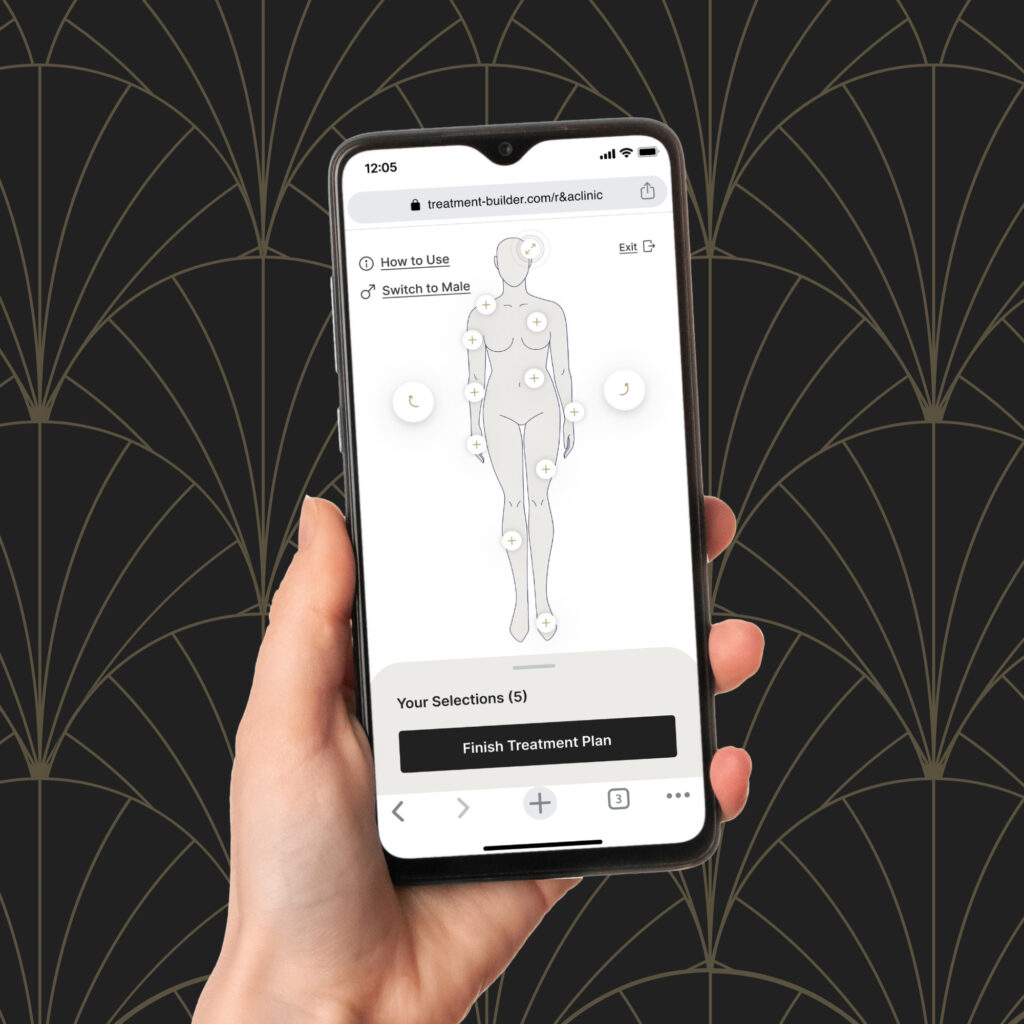
At R&A, one of the tools we use is non-invasive 3D body scanning technology that maps body shape
and provides measurements that allow us to assess and monitor changes over time. Instead of
relying solely on a number on the scales or what somebody thinks they can see in the mirror, we can
establish a baseline and begin with objective information. We measure fat distribution, muscle mass,
bone density, hip-abdo ration, posture and proportion are all assessed.
That matters because it allows us to monitor what happens next. If somebody changes their
nutrition, becomes more active, loses weight or undertakes an appropriate body treatment, we all
need to understand what has actually changed.
At R&A, assessment informs treatment, and results inform what happens next.
The midlife body is changing
This becomes particularly relevant as men move through midlife. Maintaining muscle matters not
simply because of how the body looks, but because muscle is an important part of physical function
and healthy ageing.
Likewise, where and how we carry fat matters. The objective should not automatically be to make
the number on the scales as low as possible. If somebody tells me that he wants to lose his middle,
build a stronger-looking physique or simply feel more comfortable in his clothes, that gives us a goal,
but it does not yet give us a treatment plan.
We need to ask some questions. What is his starting body composition? How active is he? What
does he eat? How is he sleeping? What changes are realistic and sustainable? What does he actually
want to achieve?
Exercise and nutrition remain fundamental. No aesthetic technology should pretend to replace
them. However, once we understand the individual, there may be a role for appropriate
technologies or treatments that support muscle development, body contouring or tissue quality as
part of a wider plan. That is very different from beginning with a machine and trying to find a patient
for it.
Now let’s look further under the bonnet
Body composition is useful, but I don’t think the conversation should necessarily stop there. How
somebody looks on the outside may sometimes give us an opportunity to think more broadly about
what is happening inside.
Metabolic health, nutrition, sleep, stress and hormones can all influence how we feel and function
through midlife. If somebody is experiencing significant changes in energy, physique or general
wellbeing, it may be appropriate to consider whether there are underlying factors that deserve
proper assessment.
Testosterone is a good example. It is discussed so frequently in relation to male ageing that it is
tempting to treat it as another marker to optimise or a shortcut to feeling younger. I don’t believe
we should approach health like that. Hormonal assessment should be driven by the individual, their
symptoms and their clinical circumstances, and any treatment needs appropriate medical oversight.
The same applies to men’s health more broadly. Depending on age, symptoms, family history and
individual risk, a wider health conversation may include prostate health and whether a PSA blood
test or other investigations are appropriate. This isn’t about indiscriminately testing every man for
everything. It is about creating an opportunity to ask sensible questions about health rather than
looking at the body purely as an aesthetic object.
Whisper it, then there are the taboo topics, that no one wants to discuss such as male urinary
incontinence, impotence, loss of libido, erectile dysfunction. There are effective technologies and
treatments for all, but there is no cure without discussion. At R&A we have specialists in urology,
andrology, dermatology as well as aesthetics, available to help you with the issues that matter to
you.
One patient, One body, One team
This is an important part of the thinking behind R&A. The clinic is structured around three
interconnected pillars: Aesthetics, Well-being and Longevity, with regeneration running through the
approach.
We have traditionally put these things into separate boxes. We might go somewhere because we
want to lose weight, somewhere else because we're concerned about our health and somewhere
else again because we dislike our skin, hair or physique. But, of course, there is only one body.
How we look, how we feel and how we function influence one another. For me, Regenerative
Aesthetics is therefore about more than a particular type of injectable or treatment. It is a
philosophy of understanding what is happening to our tissues and our bodies over time, preserving
what is good, restoring what has been lost where we can, and intervening intelligently rather than
excessively.
That doesn’t mean turning everybody who walks through the door into a medical project. Nor does
it mean chasing endless biomarkers in pursuit of eternal youth. It means having enough information
to allow better understanding and hopefully better personal decisions.
Monitor and maintain rather than crisis management
Perhaps this is where the MOT analogy is most useful. Most of us understand that a car needs
looking after long before something goes catastrophically wrong. We monitor it, maintain it and pay
attention when its performance begins to change. We can be remarkably less attentive to ourselves.
My professional philosophy has long been “little and often”: intelligent, proportionate interventions
that support us as we change rather than waiting until we dislike everything we see and attempt a
desperate or dramatic correction. I think there is something useful in applying the same philosophy
to midlife more broadly.
At R&A, we describe the process as Assess, Analyse, Treat; Monitor, Maintain, Enhance. Not
everybody will need every stage and treatment does not always mean an aesthetic procedure.
Sometimes the most useful outcome of assessment is simply understanding where you are and what
you might do differently.
Looking better can be a powerful motivation to start taking better care of yourself. But once we've
lifted the hood, there is a bigger and much more interesting question to ask: How well am I ageing –
inside and out?